Helping Your College Student Find Support on Campus
Posted by Pamela Williams
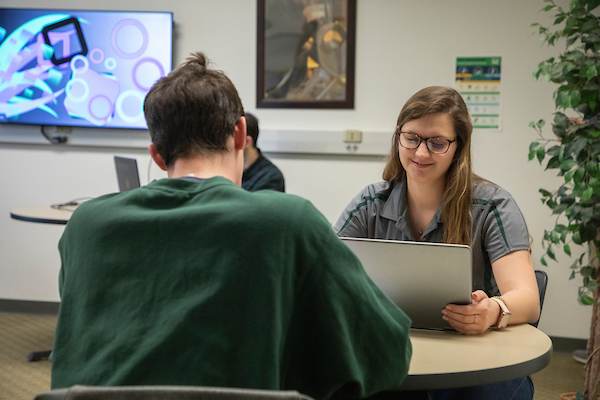
Missouri S&T Student Success Center, 2020.
As a college parent, you want to support your college student in any way that you can. You talk on the phone, you send mail and care packages (students love to find something in their mailbox), and you listen when they share joys or worries; but there is a limit to what you can do. In your attempts to help your student find their increasing independence and sense of responsibility, you need to help your student find and use appropriate on-campus support systems.
Your college student may continue to turn to you for help. Or they may feel that being grown up means that they need to do everything for themselves. In either case, your student may not be finding and taking advantage of the resources available on campus. Be there, but help your student consider who else might best help. Ask questions and suggest that your student investigate some of the possible support available on campus. Here are fifteen possible sources of help.
A professor
Has your student made a connection with a special professor or instructor? The professor of a class in which your student may be struggling is certainly a help for that particular class, but if your student feels a connection to a faculty member, he or she may be willing and able to help with other issues as well. Encourage your student to go and talk to a faculty member they trust.
An academic advisor
Your student has been assigned an academic advisor at the S&T Advising Center. This is the faculty or staff member designated to help guide your student through their college career. Your student should feel free to contact this advisor at any time to talk about academic issues, and some advisors are happy to help with personal issues as well.
A professional tutor
Encourage your student to make use of the tutoring services offered by the S&T Student Success Center for free, individualized sessions.
A peer tutor
Whether formally through a tutoring center or informally through friends or contacts, a peer tutor can be a great help. Peer tutors are students who have taken the course and done well in it. They are often able to help students, not only because they are proficient in the subject matter, but because they have taken the course and have an idea of what the professor expects.
A writing center
The S&T Writing Center is located on the third floor of the Cutis Wilson Laws Library. Students can often bring papers ranging from essays, research papers, applications, lab reports, and much more to the center and get help organizing or editing their work.
A communication center
More and more schools are establishing communication or speech centers specifically to help students with speeches or presentations for their classes. The Collaboratory, a state-of-the-art research communication hub, provides hands-on space to combine their knowledge of humanities with technological skills.
The library
Although students often do the bulk of their research online today, the Curtis Laws Wilson Library – and its research staff – is still a wonderful source of help. Research librarians can give students a tremendous amount of guidance about possible sources and ways to investigate topics. Students often feel that they will be “bothering” the librarian, but these staff members generally love the challenge of researching a new topic. Encourage your student to go in person to ask for assistance.
A student advocate
Many schools have a staff member (sometimes affiliated with the Dean’s office) who is designated as a student advocate. This is the person to whom a student can go with a question or concern that doesn’t fit neatly into any other department. If a student is having difficulty with a particular faculty member, for instance, this may be the appropriate person to whom they should talk. Care Management helps students to navigate challenges to support their well-being and success.
The career center
The Career Opportunities and Employer Relations (COER) office on campus can be a great help to a student as they consider a major, plan an internship, prepare a resume, look for a summer job, prepare for interviews, or search for a career. Many students are unaware of the breadth of services available in these offices. Encourage your student to visit this center early, even in their first year on campus, to learn what they offer and how they can help.
A workshop or other resources
Many campus departments offer workshops throughout the year to help students. Encourage your student to check the campus calendar for offerings that may be helpful. Workshops may cover everything including study skills, time management, speech preparation, date rape, campus safety, alcohol education, and stress management. Student Well-Being offers a variety of resources tailored to specific needs.
A residence life representative
Residence Assistants or Residence Directors are students or professionals who live in the residence halls and are trained to help students with issues ranging from academic concerns, roommate issues, social issues, or personal problems. These staff members are often the first to notice problems since they have daily contact with students. Residential Life has an abundance of information about living in student housing, as well as resources.
A campus ministry
There may be several religious organizations on campus or a designated chaplain. Students can find support, guidance, comfort, and social connections through these groups through Minerlink.
A counseling center
Missouri S&T offers professional counseling to students through Student Well-Being when a student may just need someone to talk to, or they may need serious, on-going counseling or medication. If you are concerned about your student, encourage them to stop by the counseling center to talk to someone. Your student should be assured that counseling centers are bound by confidentiality and counselors will not discuss their conversations with others.
A health center
If your student has any health concerns, encourage them to visit the Student Health Services, which is staffed with professionals who can provide on-going help with both walk-in hours and through appointments. Often addressing a health issue helps with other issues. Health centers are also bound by confidentiality.
A friend
Sometimes your student may simply need the ear of a friend. Ask your student whether there is someone on campus who is a friend who can spend some time helping them think through any issues. Although you, as a parent, are there for support, sometimes students need to talk to peers. Encourage your student to seek friendships – by reaching out to others.
Although, as parents, we have served many of these support functions for our children through the years, as college parents our task is to direct our student to find their own support system. Most colleges have worked hard to provide help for students in many areas of their lives. It is up to the students, however, to seek help. You can help to point your student in the right direction.
Source
Author of Article: Vicki Nelson. Article adapted from collegeparentcentral.com. Please Note: Missouri S&T does not endorse or have a relationship with SOURCE and articles are provided for information purposes only. Missouri S&T and SOURCE do not assume responsibility for error or omission in materials.
Parent & Family Relations
Norwood 107• 320 W. 12 Street / parents@mst.edu
Phone: 573-341-4209 • Website: http://parents.mst.edu/
