Preserving the past, investing in the future: Rolla Building renewed
Posted by Kimber Crull
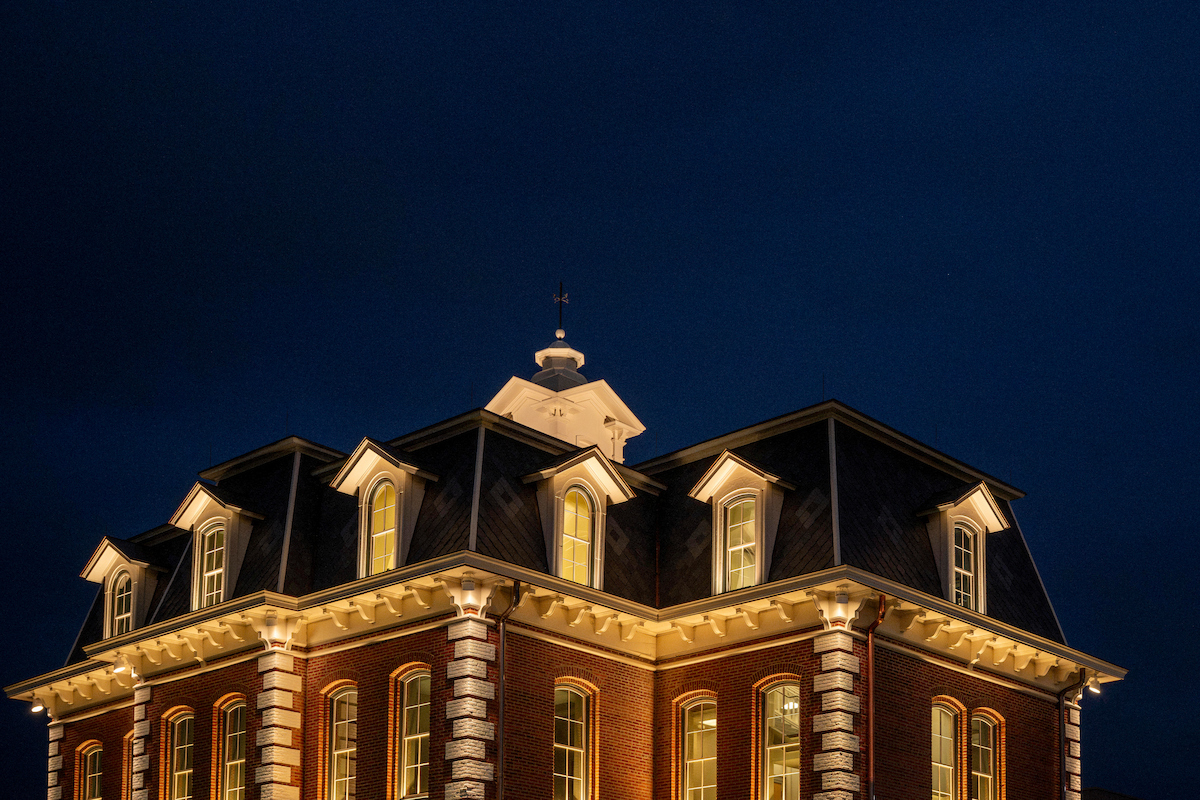
The newly renovated Rolla Building is illuminated at night. The $7.8 million project renewed Missouri S&T’s oldest building while preserving its distinctive historic character. Photo by Michael Pierce/Missouri S&T.
The Rolla Building has stood at Missouri S&T for 155 years. A recent $7.8 million renovation will help ensure it remains part of the university for generations to come.
Completed in August, the project renewed the historic building from the outside in, with work on its masonry, roof and windows as well as its heating and cooling system and interior spaces.
But the project did more than preserve a building.
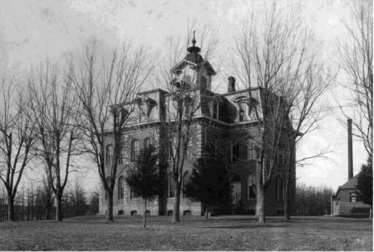
The Rolla Building, constructed in 1871, is the university’s original campus building. Today, it also serves as a historic anchor for the Havener Arrival Complex, bringing the university’s past into a part of campus designed to create a stronger first impression for prospective students, families, alumni and other visitors.
“The Rolla Building is a great example of how we can honor our history without standing still,” says Fred Stone, associate vice chancellor of facilities and operations. “We preserved and restored one of the oldest and most recognizable buildings on campus while modernizing it to continue serving the university well into the future.”
Balancing preservation and modernization
Maintaining a building constructed over a century before today’s mechanical systems, technology and energy-efficiency standards is different from building new. Improvements must accommodate current needs without sacrificing the architecture and craftsmanship that make the building distinctive.
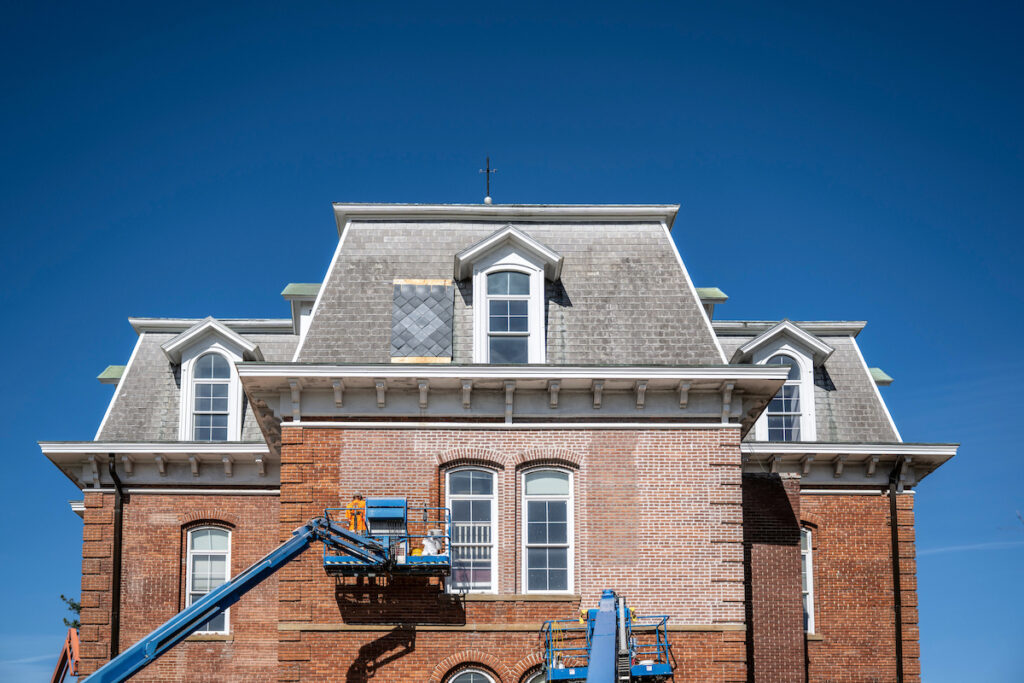
The renovation included tuckpointing and other masonry work, roof and window replacement, updates to the HVAC system, new flooring and paint in most of the building, and new office furnishings. Behind the scenes, crews made structural repairs, installed new fire protection and information technology infrastructure, and added new network cabling throughout the building. The project also removed two previous additions and replaced the southeast exterior stairs.
Many of these improvements may go unnoticed by visitors, but they help make the historic building safer, more efficient and better equipped for modern use while preserving the character that has defined it for generations.
“The improvements to the Rolla Building will help ensure that this 150-year-old building continues serving the university for generations,” says Stone.
Extending the building’s useful life also means preserving an important part of Missouri S&T’s history.
The City of Rolla originally constructed the building as a high school with $35,000 in bonds. It became the first home of the Missouri School of Mines in 1871, and the university purchased the building for $25,000 in 1875. Through the decades, it housed the library, classrooms, administrative offices and academic departments, among other university functions. A major renovation beginning in 1995 prepared the building for the mathematics and statistics department, which moved into the building in August 1997.
The latest renovation represents a new chapter.
A historic building with a new role
Preserving the structure was only part of the plan. Leaders also reconsidered the space around it.
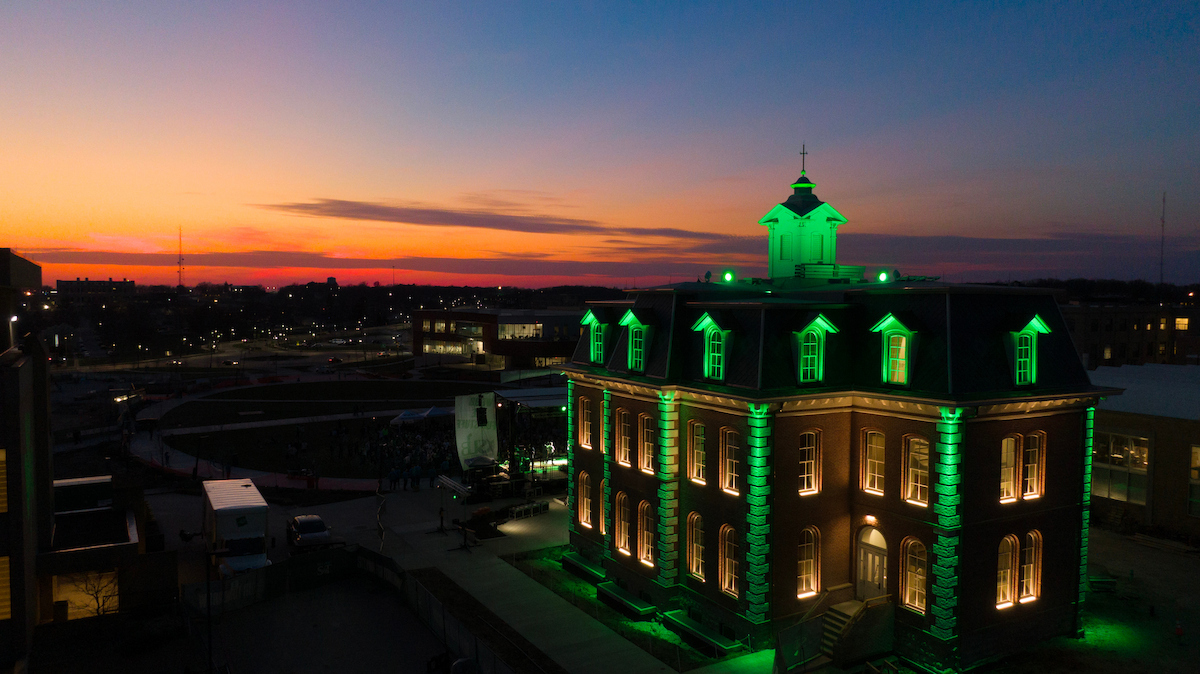
The project added a pedestrian plaza, raised planting beds, foundation landscaping, new trees and a paver connection to the Havener Arrival Complex walkway. New architectural lighting highlights the building after dark and helps make it a focal point within the Havener Arrival Complex.
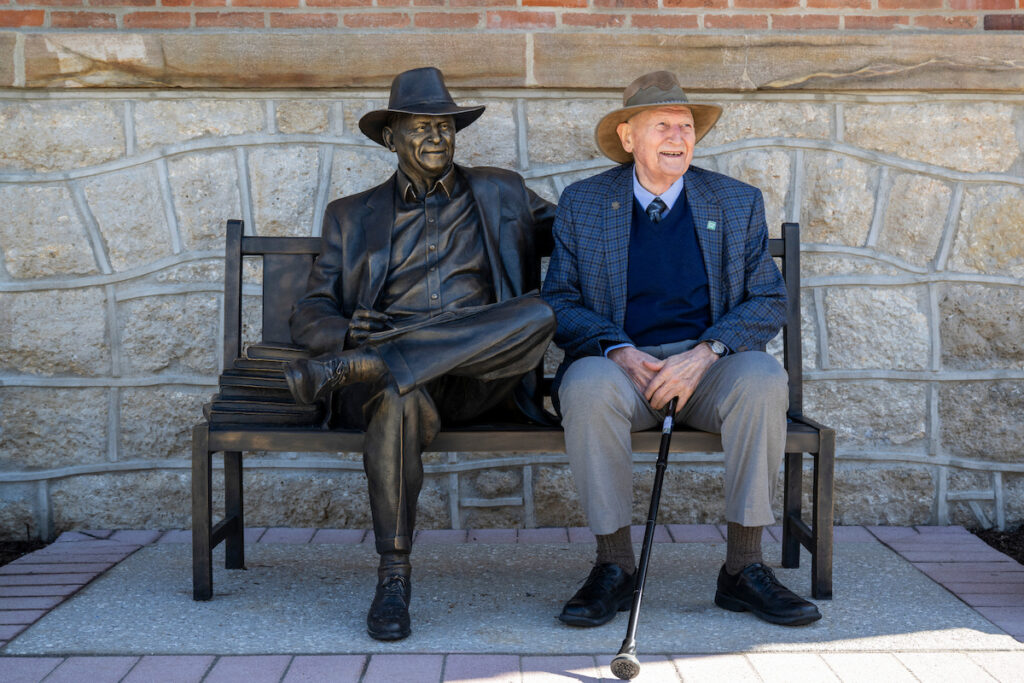
The new pedestrian plaza also includes a bronze sculpture honoring Gary Havener, a 1962 mathematics graduate whose historic $25 million gift made the Havener Arrival Complex possible. Unveiled in October 2025, the sculpture depicts Havener seated on a bench outside the Rolla Building, creating a lasting connection between the complex that bears his name and the university he has supported for more than four decades. Havener is the founder and president of Havener Companies, a commercial real estate firm in Fort Worth, Texas.
The changes support goals established through Missouri S&T’s Campus Master Plan, including improving the campus arrival experience, strengthening campus identity and pedestrian connections, and making better use of the university’s historic assets.
Rather than allowing new development around the Rolla Building to diminish its presence, planners took the opposite approach: The historic structure became an anchor for what was being built around it.
Within the Havener Arrival Complex, the Rolla Building now sits alongside facilities representing different parts of the Missouri S&T experience. The Welcome Center provides an entry point for visitors, the Innovation Lab highlights collaborative and hands-on learning, and the future Missouri Bioplex will add another representation of the university’s investment in education and research.
“The historic Rolla Building represents where we began and more than 150 years of history,” says Stone. “Within a relatively small area, visitors can see both our history and our future.”
Connecting the university’s past and future together gives its oldest building a renewed role while preserving what has made it distinctive for more than a century.
After 155 years, the Rolla Building remains a working part of Missouri S&T. The $7.8 million investment protects that history, extends the building’s useful life and places it prominently within a campus that continues to evolve around it.

Posted by Kimber Crull